The first thing you notice is the smell that’s not really a smell. You open the spice drawer before dinner, twist off the cap of that paprika you bought “not so long ago,” and… nothing. No warmth, no brightness, just a dusty whisper of what used to be flavor. You sniff again, a little harder this time, as if effort alone could wake it up. Still flat. Still dull. Dinner will be fine, but not the way you imagined it when you grabbed that recipe screenshot a few weeks back.
You look around the kitchen, vaguely annoyed. The spices are all there, lined up like quiet soldiers, labels facing out, colors faded a little more than you remember. What went wrong? The jars are closed. The date isn’t that old. You feel tricked by your own pantry.
Something in here is silently stealing flavor.
The sneaky storage habit that’s draining your spices
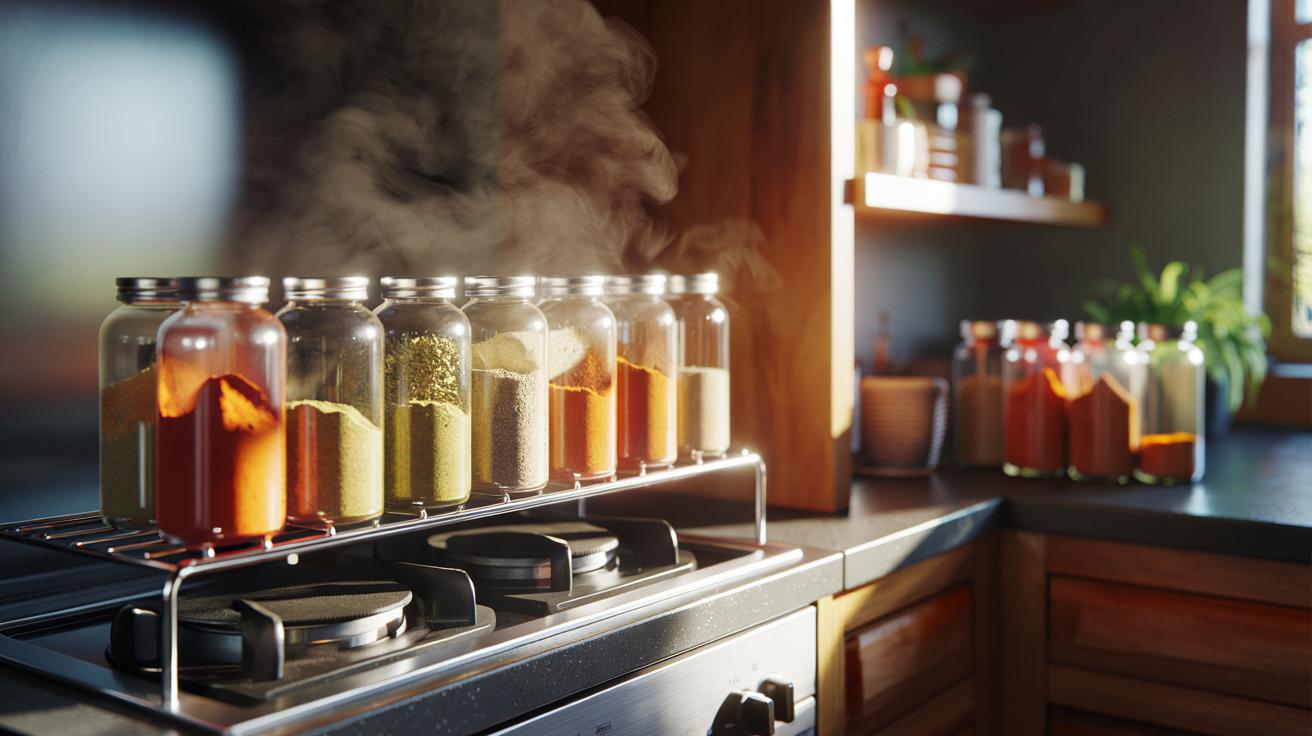
Most people blame old age when spices lose their punch. “Guess the cumin’s expired,” we mumble, shaking half the jar into the pan and still getting nothing. Yet the real culprit is often closer than we think, hiding in plain sight on the kitchen wall. That pretty spice rack sitting right above the stove or next to the sunny window? That’s flavor’s worst enemy.
Spices are plants, dried and concentrated. Their magic lives in fragile aromatic oils that break down fast when exposed to heat, light, and moisture. Put those jars in the warmest, brightest spot in the room and you’ve essentially put them on fast-forward toward bland.
You’re not imagining it. That “handy” spot might be costing you half your flavor.
Walk into ten homes and count how many spice racks are hanging proudly above the stove. It’s almost a default choice. It looks good, feels convenient, and every homeware store stages it exactly that way. A 2022 consumer kitchen survey found that most people keep their spices either on the counter, near the oven, or right by a window. The three worst zones for aroma survival, all in the top three.
One home cook I spoke to had a gorgeous open shelf running along the backsplash, lined with glass jars of turmeric, chili, oregano, and cinnamon. Instagram-perfect. She moved them into a cool, closed cabinet for three months as a test. Her verdict? “My chili flakes are suddenly dangerous again.” Same jar, same brand, just a different home.
There’s a simple reason this habit makes spices fade almost twice as fast. Every time you boil pasta or sear chicken, heat rises and wraps around that cute rack above the burners. Even if the jars feel just “a bit warm,” that repeated exposure speeds up oxidation, the chemical process that kills those aromatic oils.
Light plays its part too. Direct sun or strong kitchen lighting breaks down color and flavor molecules, turning once-vibrant powders into pale, bitter shadows. Then comes humidity: steam from pots sneaks into your jars each time you open them near the stove, clumping the powder and dulling the taste.
➡️ The forgotten bathroom liquid that brightens yellowed toilet seats effortlessly
➡️ The one winter fruit that keeps robins returning to your garden, according to birdwatchers
Stored cool, dark, and dry, those same spices can keep their strength almost twice as long. Location is everything.
How to store spices so they stay bold for longer
The simplest trick is this: imagine your spices as tiny introverts. They like the quiet corner, not the spotlight. Move them away from the stove, the oven, the dishwasher vent, and the sunny window. A closed cupboard or drawer on the opposite side of the room is usually ideal.
Keep them in airtight containers, with lids that really close, not half-cracked tins or loose paper bags rolled “well enough.” Glass jars with tight screw tops or sturdy tins are perfect. If you buy spices in packets, transfer them as soon as you open them. That one small habit sharply slows the loss of aroma.
You’ll notice the difference the next time you twist open the jar and the smell hits you before you even lean in.
There’s also how you behave with the jar in the heat of cooking. Try to avoid holding the open bottle directly over the steaming pot. That cloud of moisture rises straight into the container, and over time those tiny hits of steam clump the powder and wash away volatile oils. Pour the spice into your hand or a spoon away from the pan, then add it. Sounds fussy, but it becomes automatic quickly.
Let’s be honest: nobody really does this every single day. You’ll forget mid-week, when the pasta water is boiling over and your phone is buzzing on the counter. That’s fine. The goal isn’t perfection, just fewer steam baths for your spices and less permanent residence above the burner.
We spoke with a culinary instructor, Ana M., who summed it up bluntly: “If your spice rack lives above the stove, you’re paying full price for half the flavor. Move it, and your food improves overnight without a single new recipe.”
- Worst spots for spices: Above the stove, right next to the oven, on open shelves by a window.
- Better spots: Closed cabinet away from appliances, a drawer, or a shaded pantry shelf.
- Best containers: Airtight glass jars or tins, not thin plastic bags or loose fold-over packets.
- Smart habits: Open jars away from steam, close lids tightly, buy smaller quantities more often.
- Quick test: Rub a pinch between your fingers. If it barely smells, it’s mostly color at this point.
Rethinking what “fresh” means in your pantry
Once you see that your storage spot is quietly sabotaging you, it’s hard to unsee it. You start to notice the pale paprika, the oregano that smells like dry leaves instead of summer, the cinnamon that no longer warms the air when you open the lid. You might even feel a little cheated by all those jars you’ve collected.
Yet this is also oddly freeing. You don’t need a bigger kitchen or fancy equipment. You just need to give those jars a better home and treat them as living ingredients with a lifespan, not permanent decorations. The payoff comes fast: soups taste deeper, quick weekday stir-fries feel less flat, and even simple roasted potatoes get that “Wow, what did you put in this?” reaction.
We’ve all been there, that moment when you realize you’ve been doing something “normal” for years and only now see the hidden cost. Maybe your pretty open rack stays where it is because you love how it looks, and you accept changing your jars a bit more often. Maybe you move everything into a drawer and suddenly feel like you’re cooking in a new kitchen.
*Flavor lives in details we rarely question until someone points them out.* Next time you reach for that sleepy jar of cumin, you’ll know the quiet reason it lost its voice so fast—and you’ll also know how to keep the next one singing a lot longer.
| Key point | Detail | Value for the reader |
|---|---|---|
| Spice location matters | Heat, light, and steam above the stove make spices lose flavor roughly twice as fast | Simple move of the rack can instantly extend flavor life and save money |
| Container and handling | Airtight jars and opening them away from steam protect fragile aromatic oils | Stronger aroma, better taste, less waste from clumped or faded spices |
| Buy and test smarter | Smaller quantities, smell-and-rub tests, and rotating stock keep your lineup fresh | More reliable results in recipes and more satisfying everyday cooking |
FAQ:
- Question 1What’s the single worst place to keep my spices?
- Answer 1Right above or beside the stove, where they get constant heat and steam, is the fastest way to drain their flavor.
- Question 2Do clear glass spice jars make flavor fade faster?
- Answer 2Yes, if they’re kept in strong light or sun. Glass is fine when the jars live in a closed cabinet or drawer, away from direct light.
- Question 3How long do ground spices usually stay flavorful?
- Answer 3On average, 1–2 years in good conditions, but that can drop sharply if they’re stored hot, bright, or humid.
- Question 4Are whole spices really better than ground?
- Answer 4Whole spices generally keep their aroma longer. You can grind small amounts as needed with a grinder or mortar and pestle.
- Question 5Do I need to throw out every spice that’s past its “best by” date?
- Answer 5Not automatically. Smell and taste a pinch; if the aroma is weak or flat, it’s safe but won’t add much flavor, so it’s worth replacing.